
voice_id to use in your TTS API calls immediately.
Prerequisites
- A Smallest AI account
- A clean audio recording (5-15 seconds,
.mp3,.wav, or.mp4)
Step 1: Navigate to Voice Cloning
Log in to app.smallest.ai and select Voice Cloning from the left sidebar under Playground.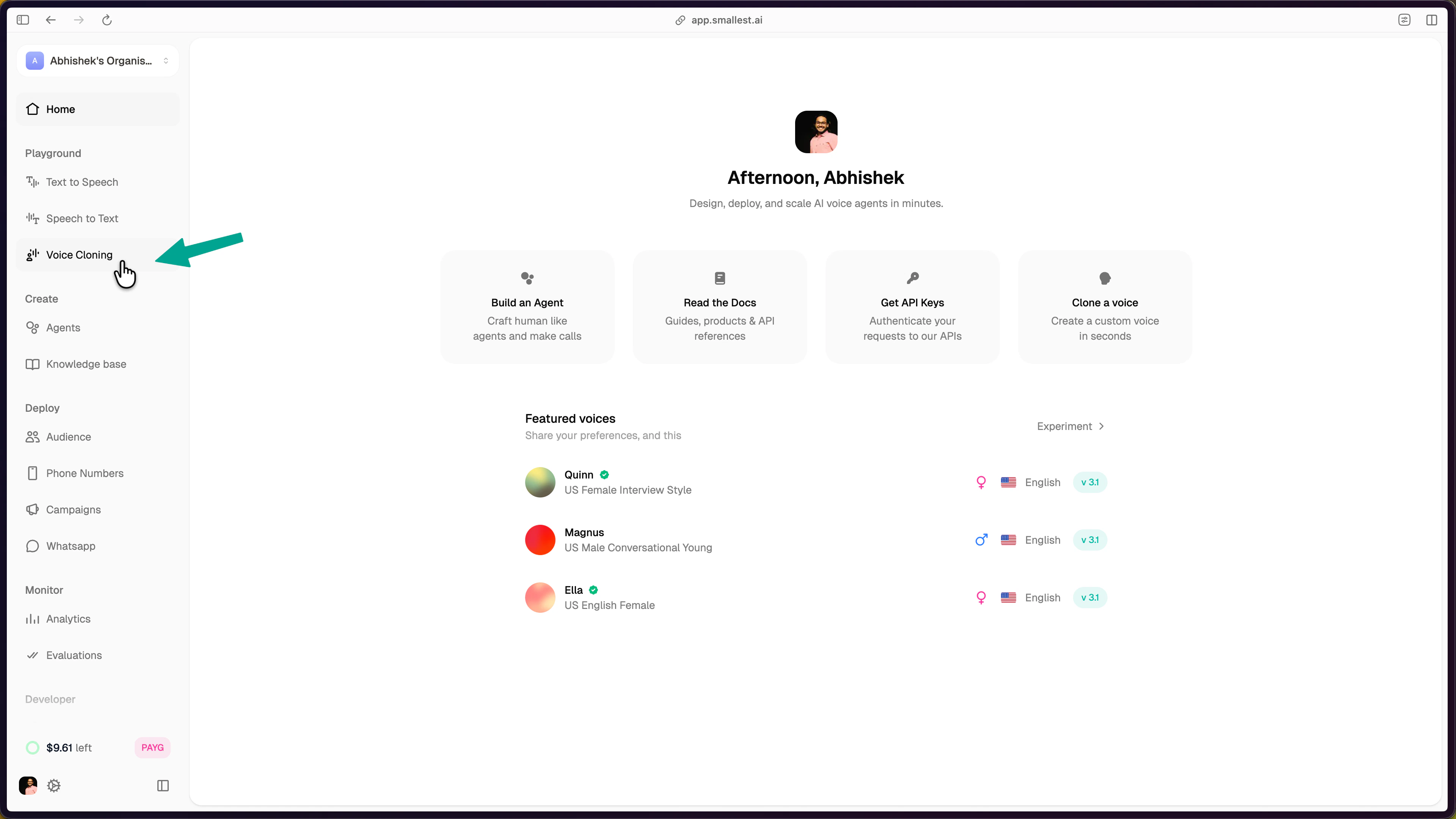
Step 2: Start a New Clone
Click the Create button. If this is your first clone, the button is displayed in the center of the page. Otherwise, use the Create button in the top-right corner.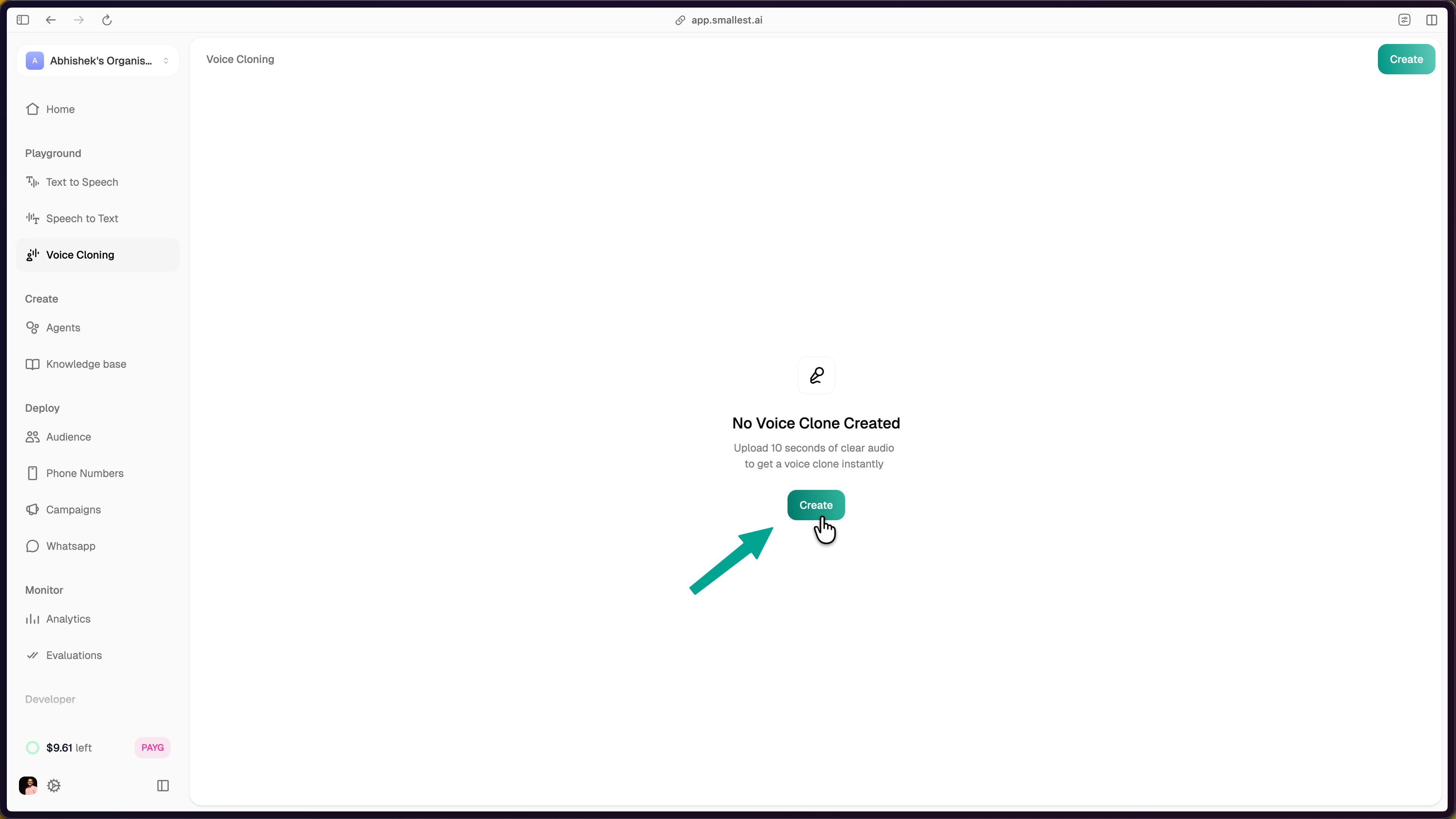
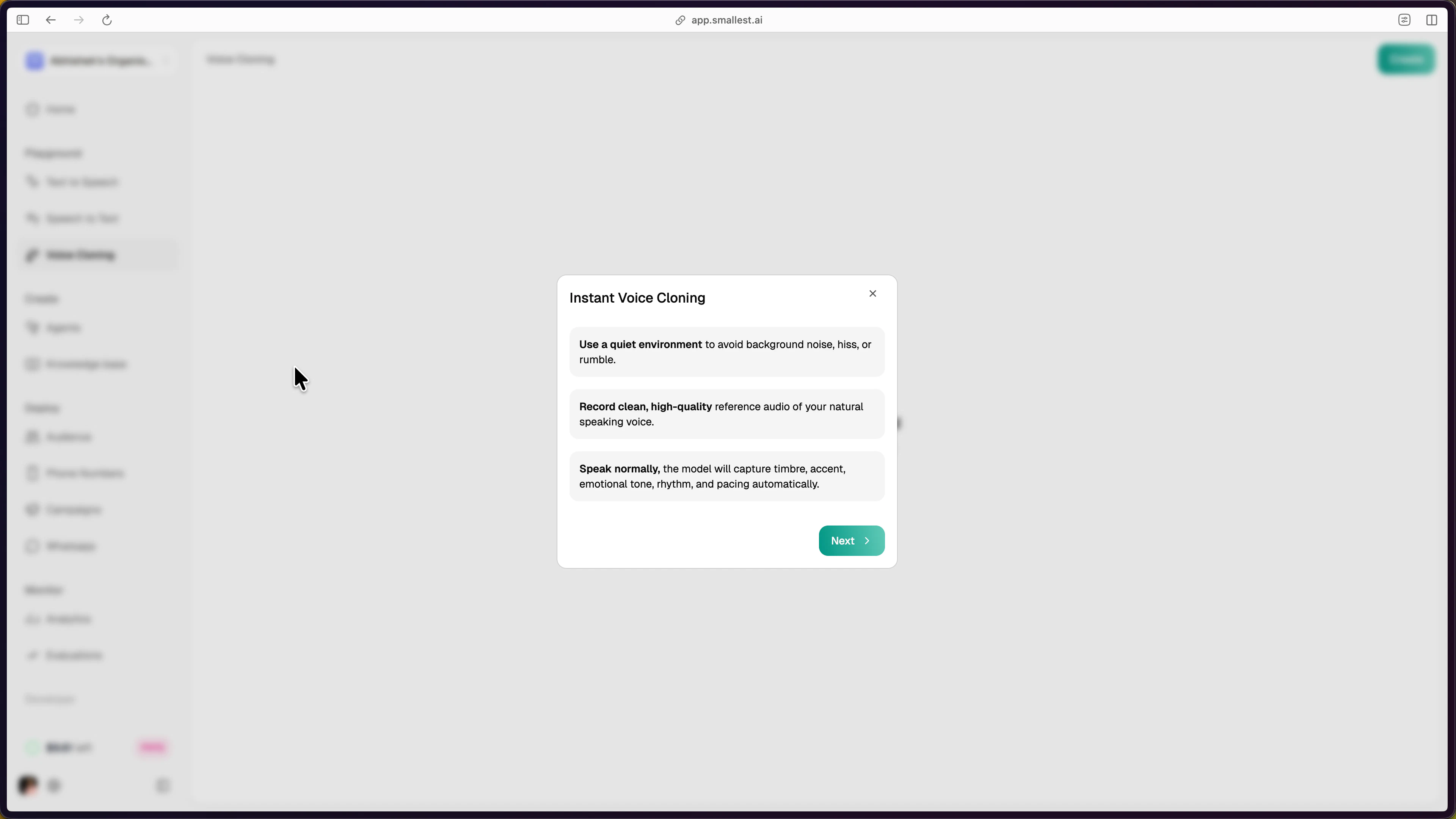
- Use a quiet environment to avoid background noise, hiss, or rumble.
- Record clean, high-quality reference audio of your natural speaking voice.
- Speak normally. The model captures timbre, accent, emotional tone, rhythm, and pacing automatically.
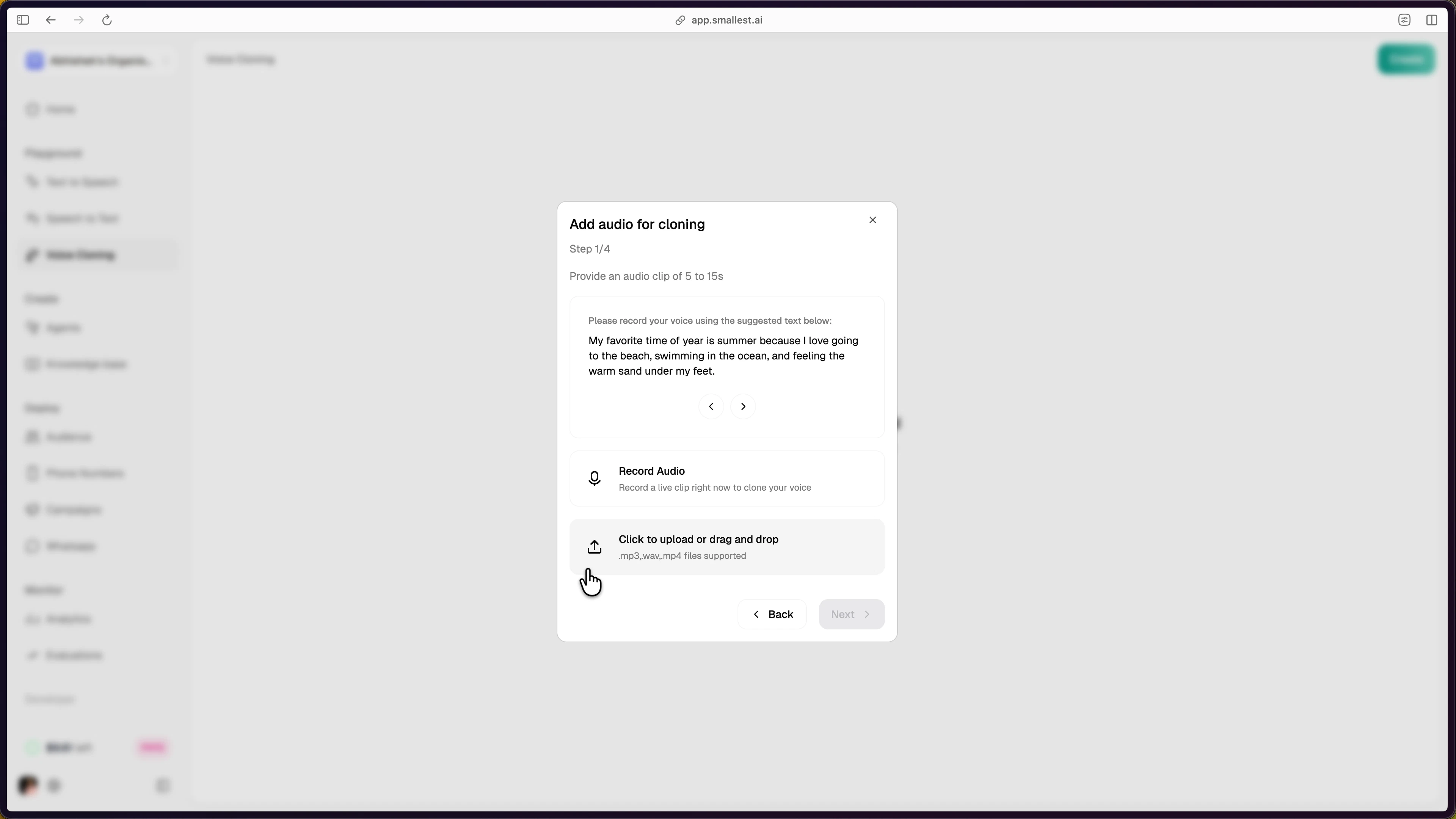
Step 3: Provide Reference Audio
Provide an audio clip of 5 to 15 seconds. Two options are available:- Record Audio — Record a live clip directly in the browser. Allow microphone access when prompted.
- Upload or drag and drop — Upload a pre-recorded file. Supported formats:
.mp3,.wav,.mp4.
Step 4: Preview and Select Language
After uploading or recording, preview your audio using the playback controls. Select the target language(s) for the clone. English is selected by default; Hindi is also available. For best results, record reference audio in the same language as your intended output. See Voice Cloning Best Practices for multi-lingual cloning guidance.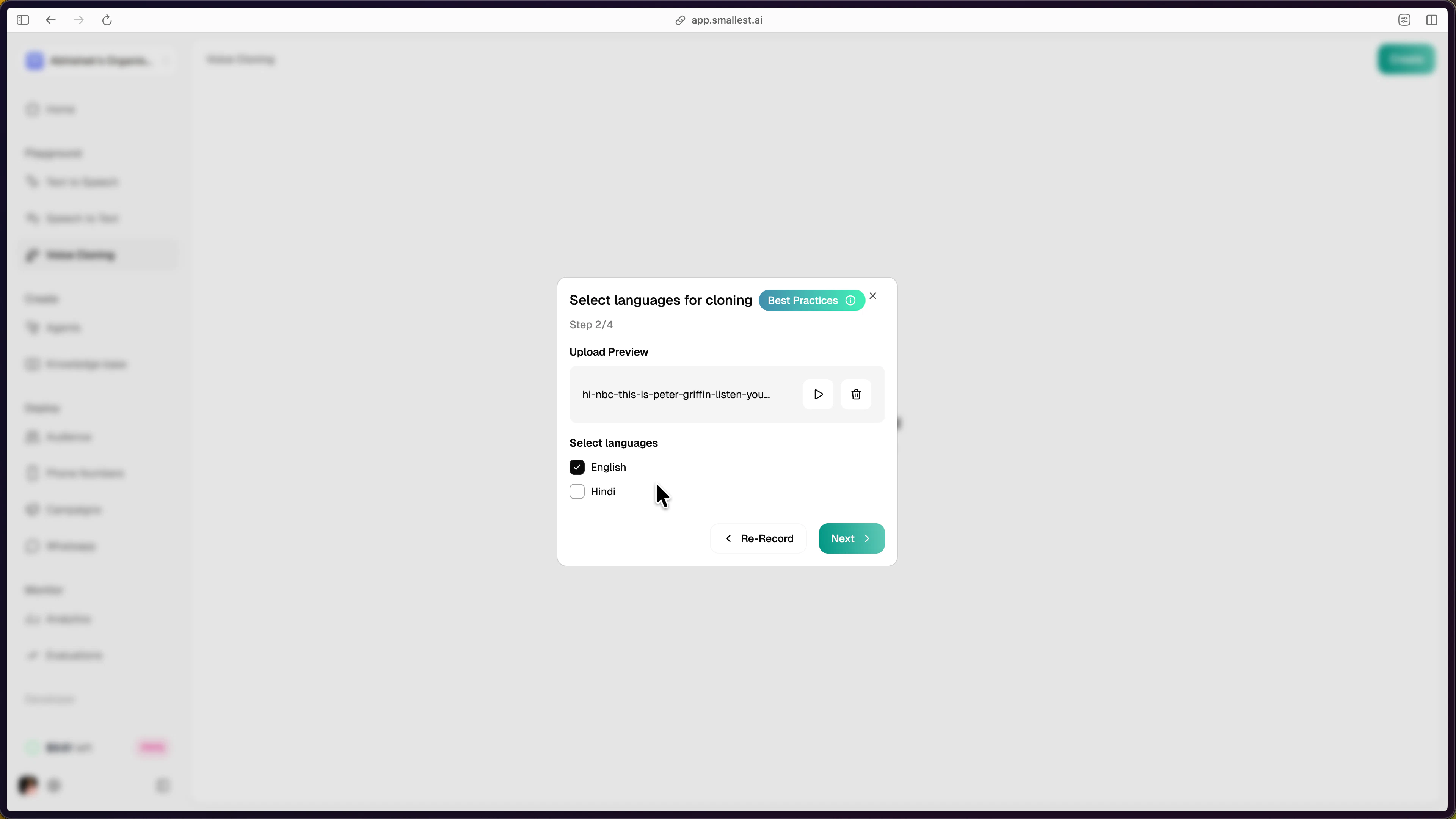
Step 5: Listen to Clone Previews
The platform generates sample audio clips using your cloned voice. Listen to the previews to verify the voice matches your expectations. If the quality is not satisfactory, click Back to re-record or upload different reference audio.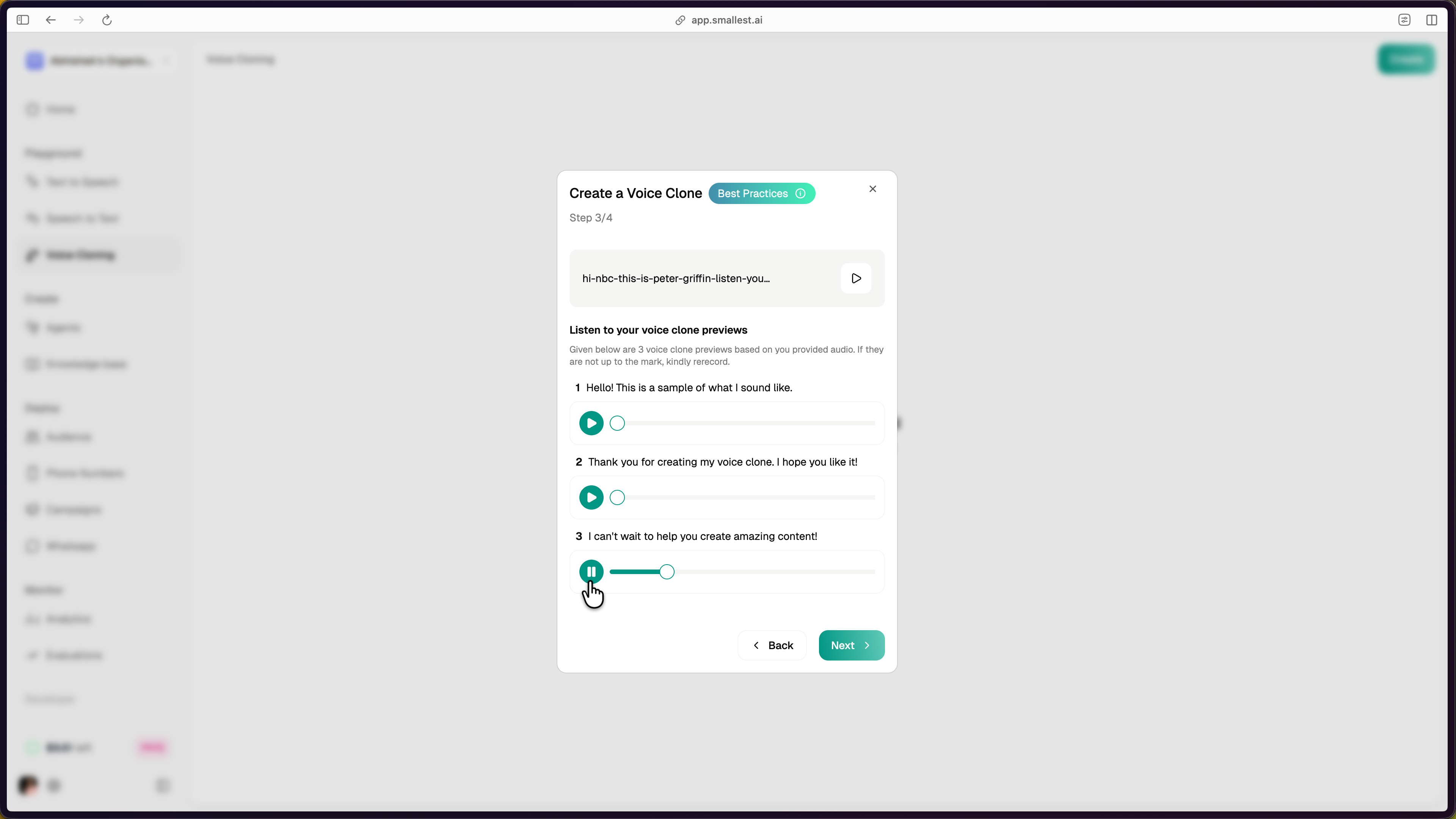
Step 6: Name and Save
Provide a Name, Tags, and optional Description for the cloned voice. Accept the terms and conditions, then click Finish to save.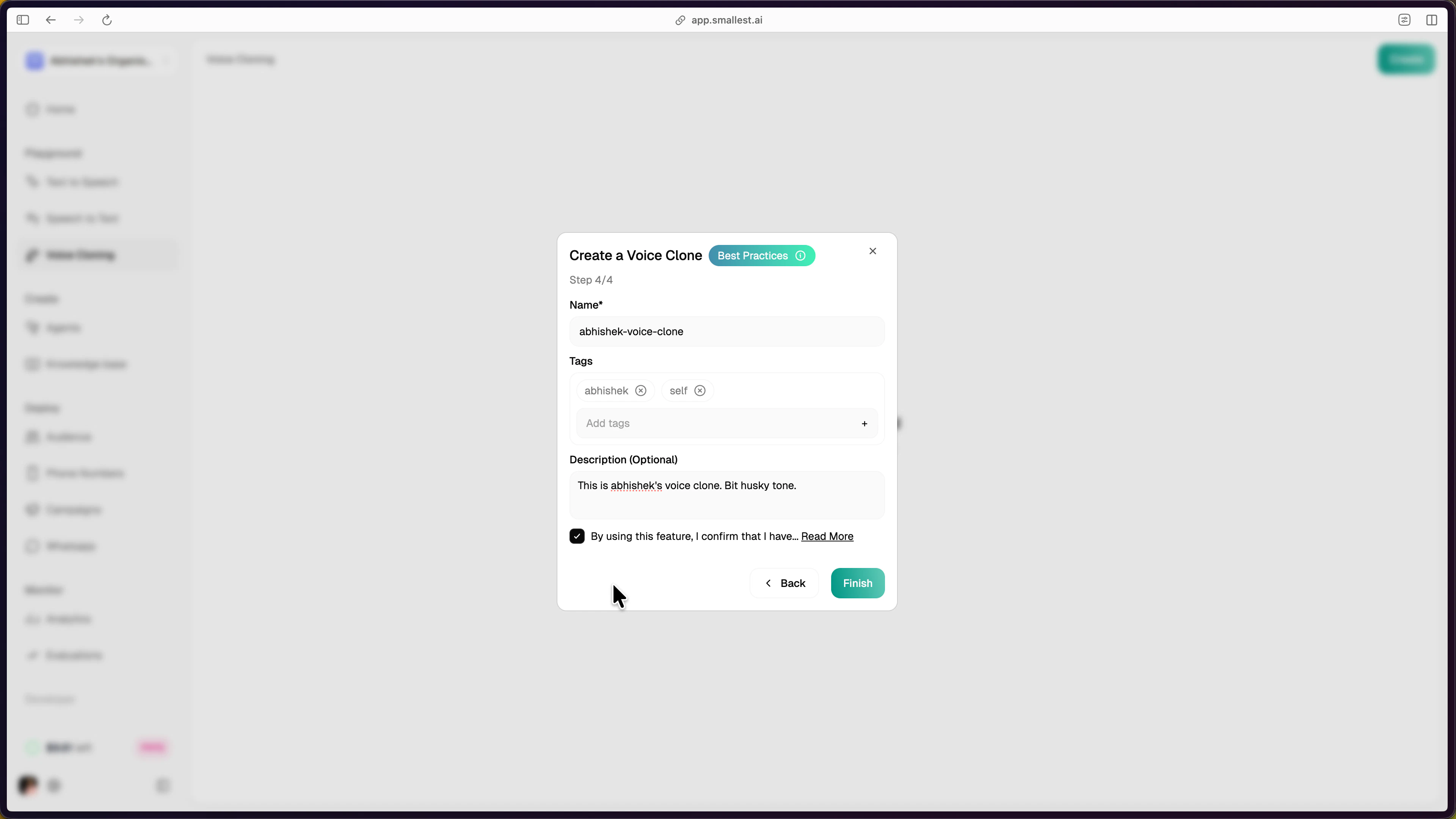
Using Your Cloned Voice
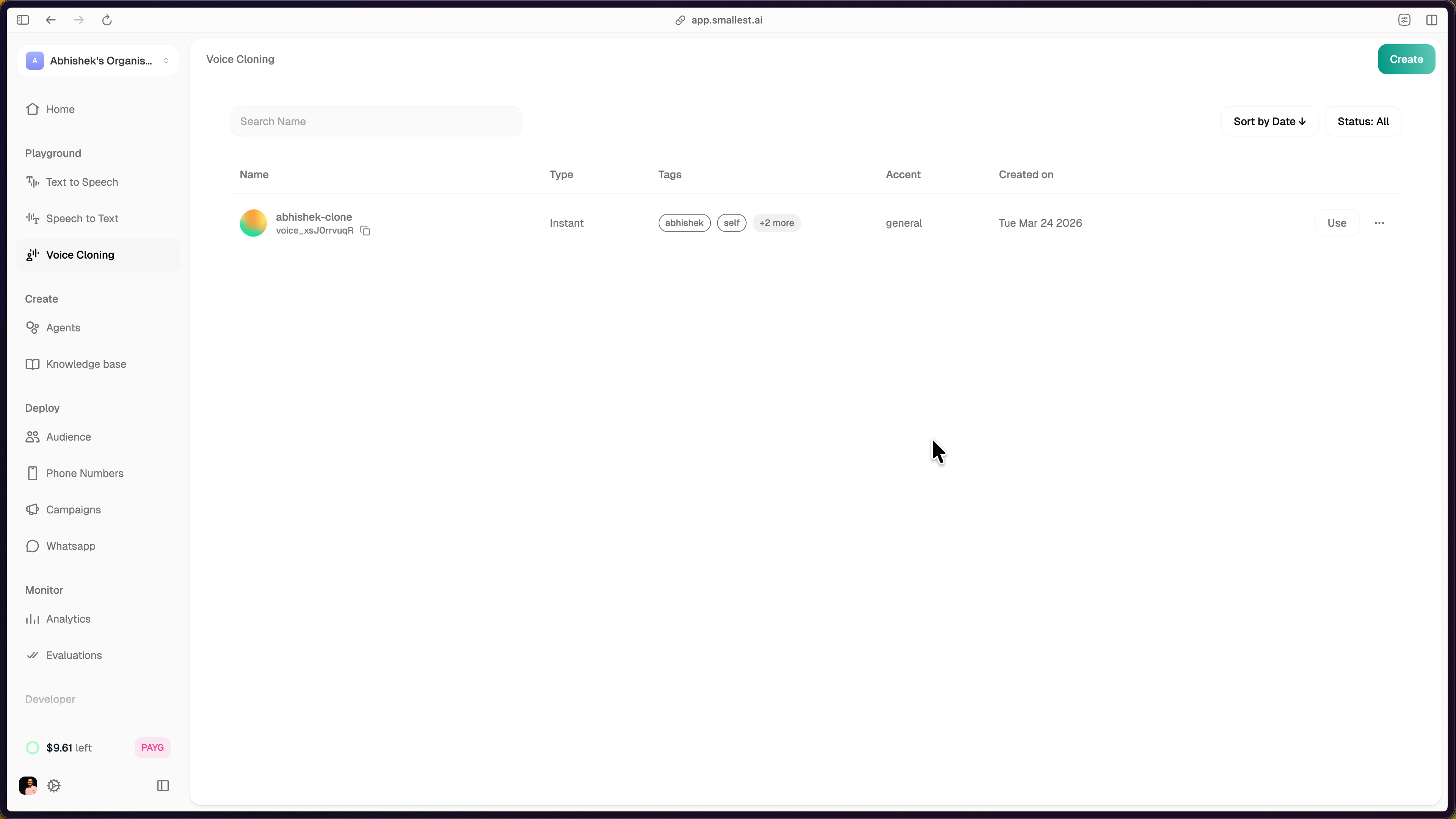
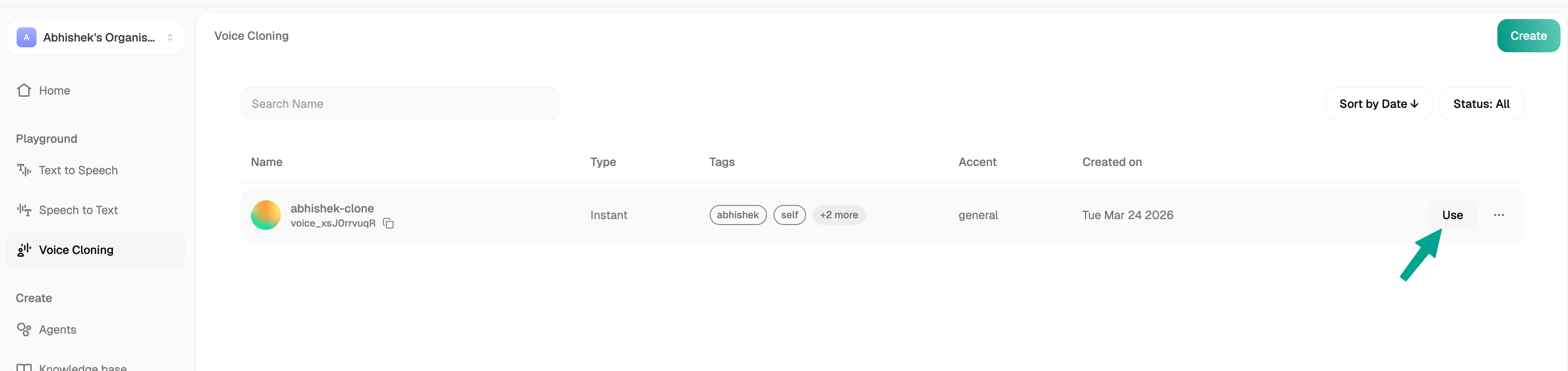
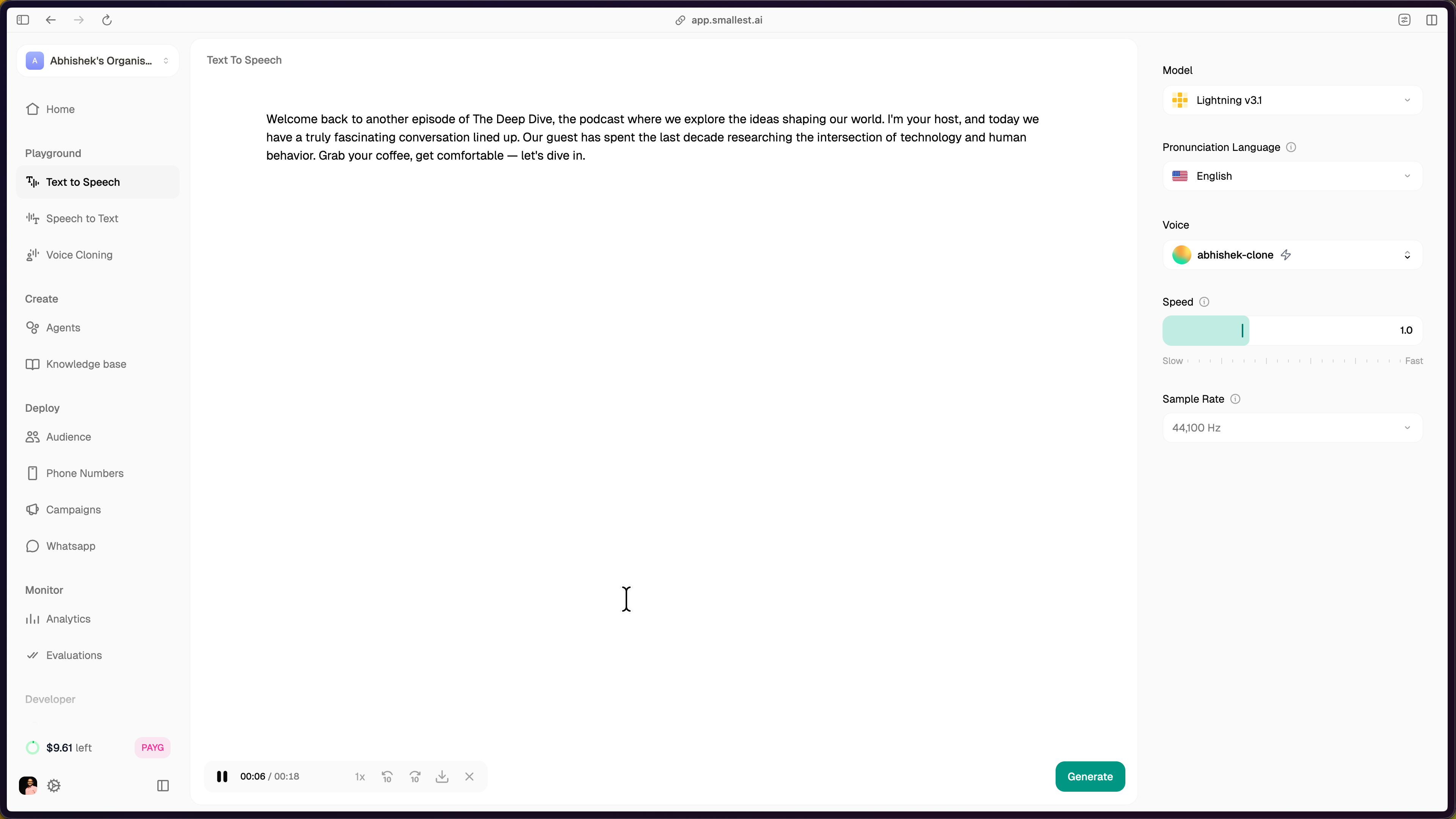
After saving, the cloned voice appears in your Voice Cloning dashboard with itsvoice_id, type, tags, accent, and creation date.
Using the Clone via API
Pass thevoice_id from your dashboard in any TTS API call: